
Images protected by Greenhouse School Websites
Quick Links

Quick Links Open/Close

East Park Primary School

  • Visit the school's Facebook

Staying Safe Online

The internet – on the whole is an inspiring and positive place.

The internet is an amazing resource which enables children and young people to connect, communicate and be creative in a number of different ways, on a range of devices.

However, the internet is always changing, and being able to keep up to date with your children’s use of technology can be a challenge.

You may sometimes feel that your children have better technical skills than you do, however children and young people still need advice and protection when it comes to managing their lives online.

Issues that your child may encounter on the internet will vary depending on their age and online activities.

This website offers comprehensive advice for parents:

NSPCC Keeping Children Safe Online Everyday Digital ParentingSafeguarding Newsletter May 2026DeepfakesInternet Matters ages 0-5 September 2026
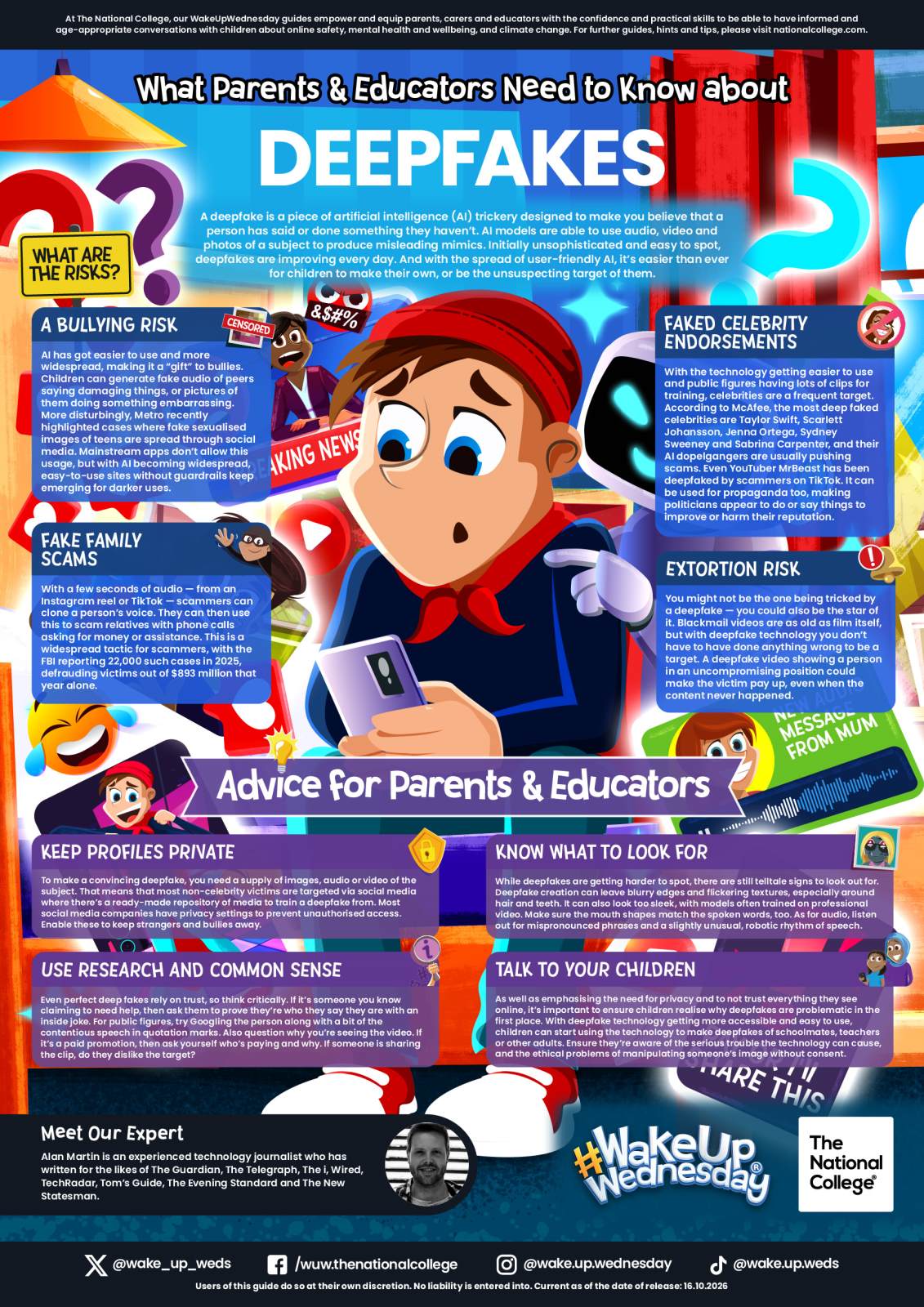
WhatsApp

WhatsApp is one of the world's best-known messaging apps, allowing users to chat, make calls and share content with friends and family. With new parental controls announced in September 2026, families have more options for managing children's online experiences. However, risks including group chat pressures, scams, unwanted contact and hidden conversations remain important considerations. 
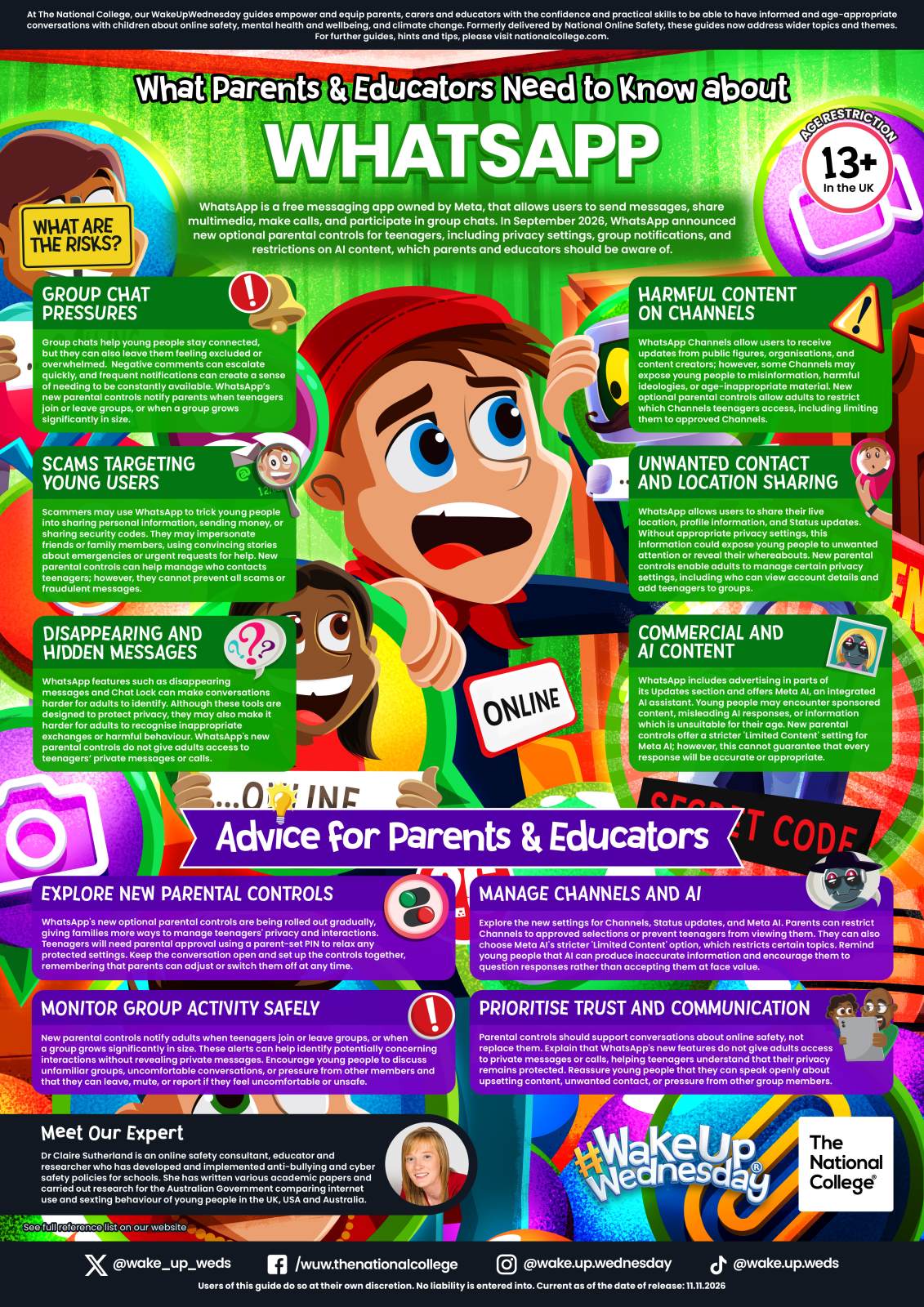
Our information guide explores WhatsApp's latest safety features, including controls for group chats, Channels, privacy settings and Meta AI. It also highlights the limitations of these protections, from potentially misleading AI-generated content to the challenges of monitoring private conversations. With practical advice for parents and educators, the guide explains how to encourage safer habits while maintaining trust and open communication.

Doxing

Having personal information shared online without consent can be a frightening experience, particularly for young people. Known as ‘doxing’ or ‘doxxing’, this practice can expose sensitive details such as home addresses, phone numbers and private family information. It can also lead to repeated harassment, blackmail, emotional distress and even physical danger, with some groups facing disproportionate risks. 
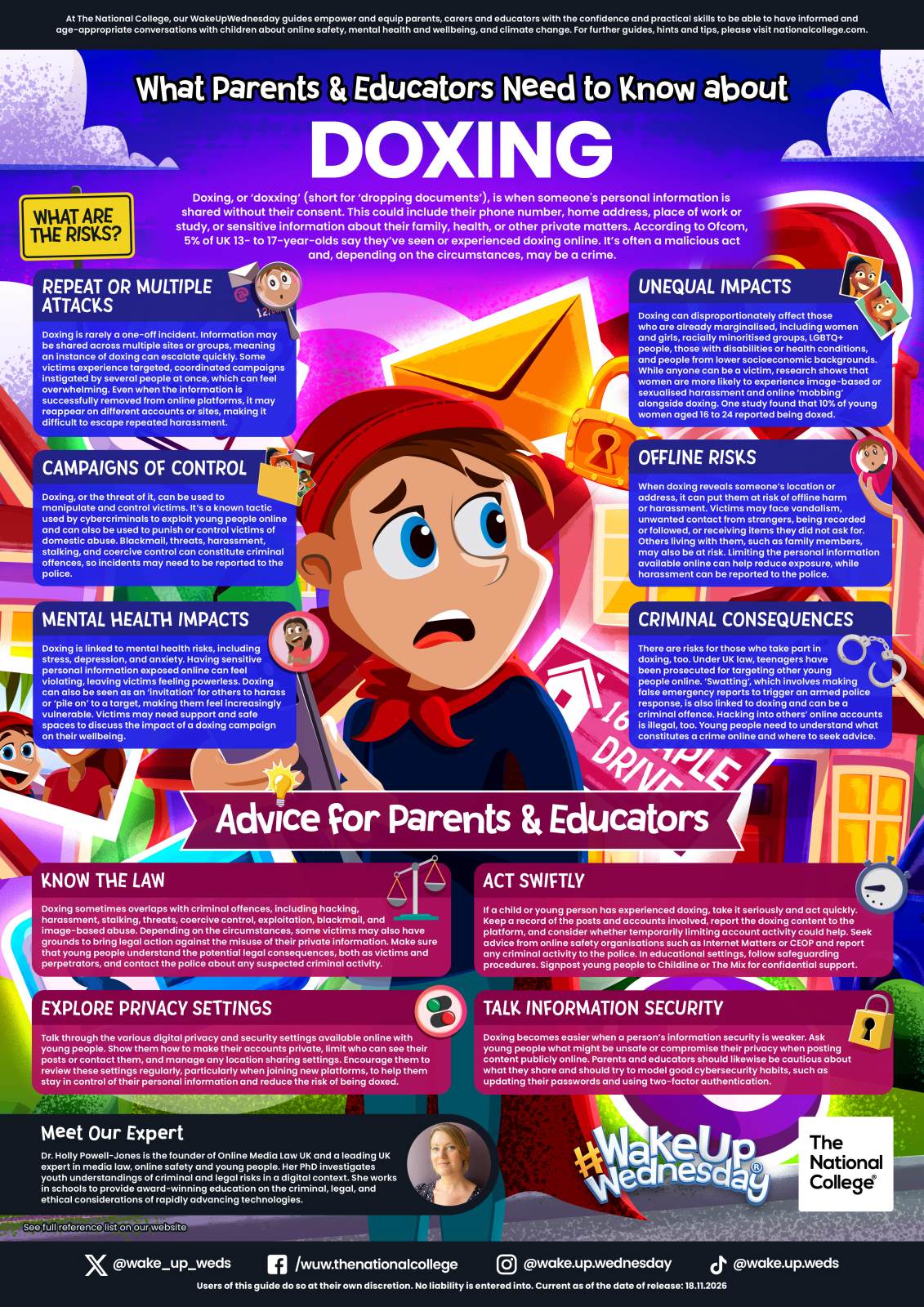
Our information guide, created with expert insight from Dr Holly Powell-Jones, explores the potential consequences of doxing for both victims and perpetrators. It also offers parents and educators practical advice on protecting young people's privacy, improving online security, recognising possible criminal behaviour and responding swiftly to incidents, helping them support children in navigating the digital world more safely.

 Grand Theft Auto VI - What You Need To Know.
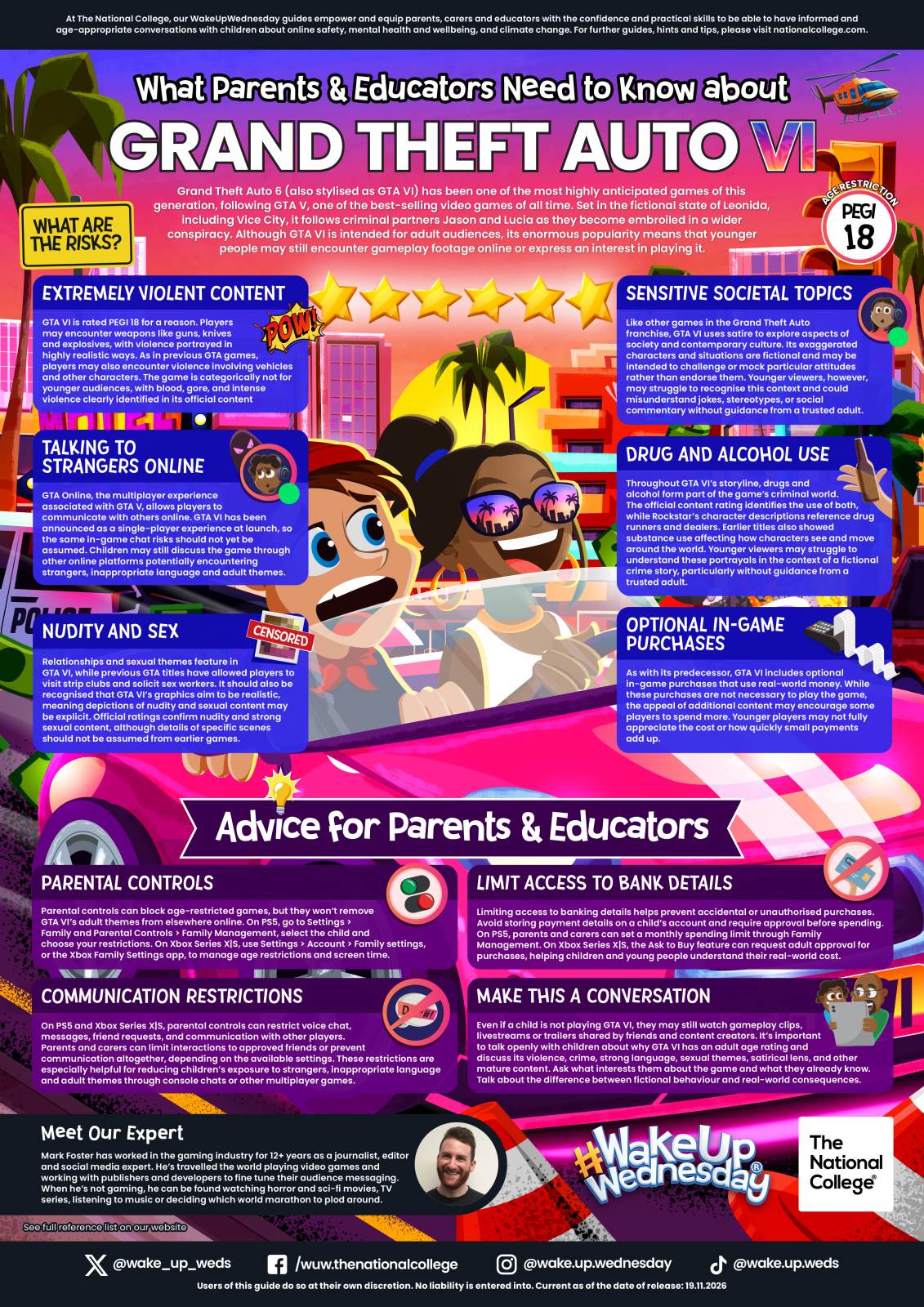
Few video games have generated as much excitement as Grand Theft Auto VI. Set in the fictional state of Leonida, this highly anticipated crime adventure follows two criminals navigating a dangerous underworld. However, with graphic violence, sexual content, drug and alcohol use, and mature social commentary, GTA VI is firmly intended for adults – despite its potential appeal to younger audiences.
Even without playing GTA VI, children may encounter its adult themes through gameplay clips, livestreams and online discussions on apps such at YouTube, TikTok and Instagram. Our information guide explores the potential risks, including inappropriate content, interactions with strangers on other platforms and in-game spending. It also offers practical advice on parental controls, communication restrictions and starting open conversations to help keep young people safe.

E-safety resources for parents

InternetMatters.org is a not-for-profit organisation that has a simple purpose – to help keep children safe in the digital world.

https://www.internetmatters.org/advice/6-10/

↑